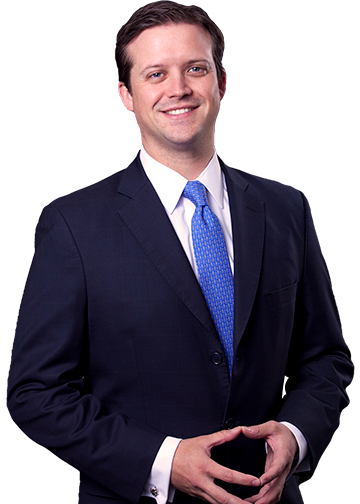
Nicholas Bohnsack
Chief Executive Officer

The End of Neutral: Three Things to Watch for Now and the Future
07/20/2026
For the last several months investors have had to navigate a very dynamic macro landscape… the War in Iran and throughput from the Strait of Hormuz; inflation, sovereign long rates, and monetary posturing and net policy positioning; and, A.I. capex spending trends, expectations, the enterprise use case, and increasingly frequent comparisons to previous bubbles, to name a few. Viewed independently, each of these threads present as measured risks, manageable, even investable to the capable macro handicapper. And inasmuch, investors continue to interpret them as cyclical fluctuations – another geopolitical shock, another inflation scare, another technology boom. That understates what is occurring beneath the surface. The investment landscape is becoming increasingly polyfragile; independent systems that were once stabilizing now reinforce one another – for better and worse. We see the breakdown and replacement of long-held and long-relied upon geopolitical, economic, and social operating conditions as the dominant thematic scaffolding of the next decade. If this is the correct read, how should investors view portfolio construction today and in the future?
To navigate the impact across two disparate time horizons we have structured current positioning in our Global Macro Allocation portfolios and our Strategas Macro Thematic Opportunities ETF (SAMT) around five themes: 1) Cash Flow Aristocrats; 2) Artificial Intelligence; 3) Energy Power Renaissance; 4) De-Globalization; and, 5) Analog Edge. The balance embraces both shifting pockets of cyclical strength and concern with structural considerations too important to not have on our radar.

In the near-term, there is no need to become acutely defensive, but a maturing cycle and extended valuation paradigm does invite increasingly selective portfolio construction. Since the Global Financial Crisis (and with bravado since the Covid pandemic) investors have become conditioned to treat geopolitical shocks as buying opportunities, inflation surprises as temporary, and higher interest rates as self-correcting. That framework was constructed in an era in which globalization reduced (economic) costs (though social costs were arguably quite high), central banks held long-term interest rates low, and fiscal deficits rarely constrained monetary policy. Those assumptions are being challenged. Today, energy security influences inflation, inflation limits central banks, sovereign borrowing influences long rates, and with them, the valuation of nearly all financial assets.
If investors subscribe to this conclusion, the practical implication is to become increasingly aware of portfolio duration exposures. Duration resides within credit and equity structures dependent upon perpetual refinancing, assets valued against extraordinarily low discount rates or capitalized in an era of inexpensive capital, and growth franchises whose valuations remain sensitive to movements in real yields. Many portfolios that appear diversified across asset classes are, in fact, highly concentrated in a single assumption – that long-term interest rates will revert toward the secular lows evidenced in the wake of macro events of the last fifteen years. But, if the investment landscape is instead left to contend with higher financing costs, greater term-premium, and inflation volatility, portfolio concentration (or diversification by label) may prove far less effective than diversification by macro exposure.
At the same time, investors should resist the temptation to abandon technological innovation merely because comparisons to previous speculative episodes have become fashionable. While Artificial Intelligence shows characteristics similar to prior investment booms, i.e., enormous capital expenditures, optimistic projections, and rapidly expanding valuations, unlike many historical bubbles, A.I. is simultaneously creating real demand for physical infrastructure. The distinction matters. Investors should increasingly differentiate between speculative beneficiaries of A.I. enthusiasm and businesses controlling the physical bottlenecks that make A.I. deployment possible.
Likewise, the fragmentation of post-WWII geopolitical coalitions and the emergence of new geographic and economic alliances argue for greater emphasis on companies possessing control of network franchises: raw material and intermediate good supply chain resilience, distribution and pricing power, financing and strong free-cash-flow rather than those dependent upon the frictionless perpetuation of globalization. In short, we see portfolio construction built around resilience, not because recession is imminent (nor as inevitable as it may be), but because uncertainty has become a persistent investment factor rather than a temporary market condition.
If the defining investment question over the past four decades was how to allocate capital within an increasingly globalized, financially integrated and disinflationary world, looking ahead, the defining question of the next several decades may instead become how to allocate capital through the replacement of the system itself. We believe investors should begin to consider positions less focused on cyclically opportunistic returns and more in terms of exposure to the architecture of emerging geopolitical, economic, and social operating convention. The dominant themes are likely to be less about timing the next Fed decision and more about understanding where the physical, financial, and political foundations of the system overlap. The Alternative asset bridge in our Global Macro Allocation portfolios together with the “Industrial Power Renaissance” and “De-Globalization” themes in our SAMT ETF are examples of the increasingly interconnected relationship between infrastructure, energy security and strategic mineral access, and logistics networks.
Equally important is recognizing that the monetary system itself may be entering a period of volatility. For most of modern history, national currencies served simultaneously as units of account, stores of value, a settlement mechanism, collateral, and as reserve assets. Emerging technologies, increasingly cumbersome sovereign debt service, and the weaponization of reserves has put the Eurodollar system under intense pressure. This is not to suggest the demise of the Dollar’s reserve currency status is imminent. Rather, it suggests that investors should increasingly own assets that would benefit from any number of a variety of outcomes, e.g., gold and selected commodity exposure, ownership of businesses controlling irreplaceable and productive real assets or scarce infrastructure providing optionality against structural monetary change.
Perhaps the most profound implication, however, concerns the nature of equity leadership. Throughout financial history, the world’s greatest compounding businesses have generally emerged from the dominant economic power of the era: Amsterdam during Dutch commercial supremacy; London during Britain’s industrial ascent; New York throughout the American century. If the physical architecture of the global economy is gradually shifting toward an increasingly multi-polar world characterized, in part, by Asian manufacturing leadership, A.I.-enabled industrial production, regionalized supply chains, and tokenized financial infrastructure, then equity leadership may increasingly reflect those centers of economic gravity. Investors need not predict precisely when such transitions occur to benefit from them, but it may be wise to recognize that structural transformations unfold gradually beneath the surface before appearing suddenly on the leaderboard. The objective, then, is not to forecast every macro event correctly, but to construct portfolios sufficiently diversified across emerging sources of wealth creation.

Nicholas Bohnsack
This communication represents our views as of 7/20/2026, which are subject to change. The information contained herein has been obtained from sources we believe to be reliable, but no guarantee of accuracy can be made. This communication is provided for informational purposes only and should not be construed as an offer, recommendation, nor solicitation to buy or sell any specific security, strategy, or investment product. This communication does not constitute, nor should it be regarded as, investment research or a research report or securities recommendation and it does not provide information reasonably sufficient upon which to base an investment decision. This is not a complete analysis of every material fact regarding any company, industry, or security. Additional analysis would be required to make an investment decision. This communication is not based on the investment objectives, strategies, goals, financial circumstances, needs or risk tolerance of any particular client and is not presented as suitable to any other particular client. Past performance does not guarantee future results. All investments carry some level of risk, including loss of principal.
Carefully consider each of the Funds' investment objectives, risk, and charges and expenses. This and other information can be found in the Funds' summary or full prospectus which can be obtained by calling (855) 273-7227 or by visiting strategasetfs.com. Please read the prospectus, carefully before investing.
Strategas Asset Management, LLC serves as the investment advisor for each Fund and Vident Advisory, LLC serves as a sub advisor to each Fund. The Funds are distributed by SEI Investments Distribution Co. (SIDCO), which is not affiliated with Strategas Asset Management, LLC or any of its affiliates, or Vident Advisory, LLC or any of its affiliates.
Shares of any ETF are generally bought and sold at market price (not NAV) and are not individually redeemed from the fund. Brokerage commissions will reduce returns.
An investment in the Fund involves risk, including possible loss of principal.
In addition to the normal risks associated with investing, the Strategas Global Policy Opportunities ETF (SAGP) is subject to lobbying focused investment risk. The adviser's investment process utilizes lobbying intensity as the primary input when selecting investments for the Fund's portfolio and does not consider an investment's traditional financial metrics. The Fund may underperform other funds that select investments utilizing more traditional investment metrics. The Fund may also focus its investments in a particular country or geographic region outside the U.S. and may be more susceptible to economic, political, regulatory or other events or conditions affecting issuers and countries within that country or geographic regions well as risks of increased volatility and lower trading volume.
In addition to the normal risks associated with investing, the Strategas Macro Thematic Opportunities ETF (SAMT) is subject to macro-thematic trend investing strategy risk. Therefore, the value of the Fund may decline if, among other reasons, macro-thematic trends believed to be beneficial to the Fund do not develop as anticipated or maintain over time, or the securities selected for inclusion in the Fund's portfolio do not perform as anticipated.
In addition to the normal risks associated with investing, the Strategas Macro Momentum ETF (SAMM) may invest in smaller companies, heavily in specific sectors, and also invest in gold, all of which can exhibit high volatility. Securities may be difficult or impossible to sell at the time and the price desired. Investments with exposure to international markets may experience capital loss from unfavorable fluctuation in currency values, differences in generally accepted accounting principles, or from social, economic or political instability in other nations. REITs are subject to changes in economic conditions, interest rates, and credit risk. MLPs involve risks related to limited control and limited rights to vote on matters affecting the MLP. MLP common units and other equity securities can be affected by economic and other factors affecting the stock market in general, expectations of interest rates, investor sentiment towards MLPs or the energy sector, changes in a particular issuer's financial condition, or unfavorable or unanticipated poor performance of a particular issuer. MLP investments in the energy industry entail significant risk and volatility.
The Funds may be more heavily invested in particular sectors and may be especially sensitive to factors and economic risks that specifically affect those sectors.
The End of Neutral: Three Things to Watch for Now and the Future
Jul 20 2026